For laboratory research use only · Not for human consumption
Shop
RECOVERY

MOTS-C

10mg
$55.00
MOTS-C 10mg product photograph
1
14 available · Ships within 48 hours
  • Third-Party Tested
  • Cold-Chain Handled
  • Concierge Support

Questions about this compound, specifications, or documentation?

Speak with the Concierge

16-amino-acid mitochondrially-derived peptide referenced in published literature investigating AMPK pathway signaling and mitochondrial metabolic biology.

  • Mitochondrial biology research
  • Cellular bioenergetics
  • Cold-chain handled, third-party tested
VIEW BATCH COA
Independent lab verification · current batch
  • THIRD-PARTY TESTED
  • COLD-CHAIN HANDLED
  • TRACKED SHIPPING
  • QUALITY-FOCUSED SOURCING
SPECIFICATIONS
Product
MOTS-C
Strength
10mg
Vial Size
10mg per vial
SKU
VLR-MOTS-10
Batch / Lot
Current batch listed on COA
Storage
Refrigerate 2–8°C · protect from light
Form
Lyophilized powder
RESEARCH USE ONLY

Sold strictly for laboratory and research purposes — never for human consumption, food, drug, or cosmetic use. 21+ only. A standard we hold ourselves to, not just the law.

EDUCATIONAL OVERVIEW

About this compound

Context, not noise — what the research actually says.

WHAT IT IS

A research compound investigated in mitochondrial biology and cellular bioenergetics literature.

RECOVERY
KEY BENEFITS
  • Studied in cellular bioenergetic pathways
  • Investigated in oxidative-balance literature
  • Referenced in sirtuin and cellular-signaling research
COMMON USES
  • Mitochondrial biology research
  • Cellular bioenergetics studies
  • Foundational layer across the catalog
THINGS TO KNOW
  • Lyophilized — requires reconstitution with BAC water
  • Refrigerate; protect from light
  • Research use only — not for human consumption
RELATED COLLECTION
Cellular Recovery Research Collection

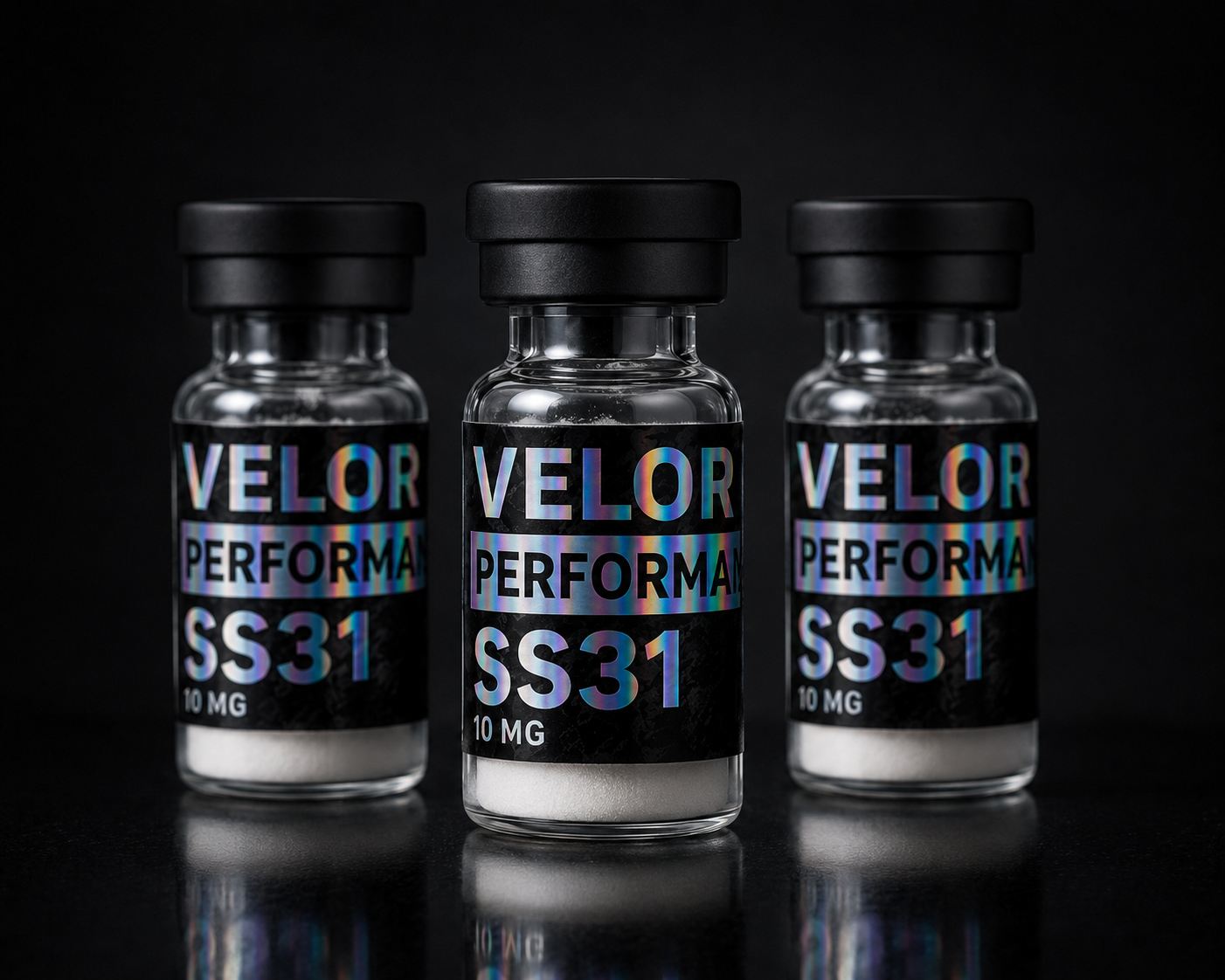
Pairs with NAD+ + SS-31A three-vial collection assembled around mitochondrial biology and cellular bioenergetics research.

VIEW COLLECTION
COLLECTION PRICE
$130.00
STORAGE

Cold-chain handling

REFRIGERATED
Store unopened at 36–46°F (2–8°C).
RECONSTITUTED
Keep refrigerated. Do not freeze.
PROTECT FROM LIGHT
Original packaging until use.

Store unopened vials refrigerated at 36–46°F (2–8°C). After reconstitution, keep refrigerated and use within the timeframe specified by your laboratory practice. Protect from light. Do not freeze reconstituted solution.

SHIPPING

Shipping information

Insulated, tracked, and handled with care from our facility to yours.

PROCESSING
Ships within 48 hours of order confirmation.
COLD-CHAIN
Insulated packaging with ice packs for temperature-sensitive compounds.
TRACKED & INSURED
Tracking provided. Domestic delivery typically 2–5 business days.

Local pickup is available by appointment for customers in the Phoenix, Arizona area. See the full shipping policy for details, accepted payment methods, and scheduling.

FAQ

Common questions

SCIENTIFIC RESEARCH OVERVIEW · SRO

Scientific Research Overview

A structured summary of published scientific literature on this compound — provided for educational reference only.

Cellular Health Research
RESEARCH SNAPSHOT
Research Category
Investigational mitochondrial-derived peptide
Biological Targets
  • Mitochondria
  • AMPK signaling
  • Cellular energy metabolism
Primary Areas of Research
Mitochondrial-derived signaling · AMPK-pathway biology · Cellular energy metabolism · Glucose and lipid homeostasis · Insulin-sensitivity research · Exercise and metabolic stress responses
Current Stage of Research
Preclinical and Early Human Clinical Research
WHAT IS MOTS-C?

MOTS-c (Mitochondrial Open Reading Frame of the 12S rRNA-c) is a 16-amino-acid peptide encoded within the mitochondrial genome. It is investigated in the scientific literature as a mitochondrial-derived signaling peptide that regulates metabolic pathways, including AMPK activation and glucose and lipid homeostasis. Evidence spans cell-culture and animal models, with emerging early-phase human studies examining exercise-metabolism and age-related metabolic parameters.

PRIMARY AREAS OF RESEARCH
  • Mitochondrial-derived signaling
  • AMPK-pathway biology
  • Cellular energy metabolism
  • Glucose and lipid homeostasis
  • Insulin-sensitivity research
  • Exercise and metabolic stress responses

  • Published studies have investigated MOTS-c as a regulator of metabolic homeostasis in preclinical models, including effects on obesity, glucose tolerance, and insulin-sensitivity markers.
  • Research suggests activation of AMPK signaling and downstream modulation of genes involved in glucose uptake and lipid handling in cell and animal models.
  • Current evidence indicates translocation of MOTS-c to the nucleus under metabolic stress, where it may influence transcriptional programs related to energy metabolism.
  • Investigators have observed changes in exercise-related metabolic parameters and age-related metabolic decline in published preclinical and early human studies.

MOTS-c is being studied for its role as a mitochondrial-to-cellular signaling peptide. Current evidence indicates that MOTS-c can activate the AMP-activated protein kinase (AMPK) pathway, which is a central regulator of cellular energy status. Published work suggests that this activation influences glucose uptake, fatty-acid oxidation, and mitochondrial biogenesis-related gene programs. The peptide may also translocate to the nucleus under stress conditions to modulate transcriptional responses. Its full mechanism in human physiology remains under investigation.
CURRENT AREAS OF INVESTIGATION
  • Mitochondrial Function
  • Cellular Health
  • Metabolic Health
  • Healthy Aging
  • AMPK Signaling
  • Energy Metabolism

  1. Lee C, Zeng J, Drew BG, et al. The mitochondrial-derived peptide MOTS-c promotes metabolic homeostasis and reduces obesity and insulin resistance. Cell Metab. 2015;21(3):443-454. View source
  2. Kim KH, Son JM, Benayoun BA, Lee C. The mitochondrial-encoded peptide MOTS-c translocates to the nucleus to regulate nuclear gene expression in response to metabolic stress. Cell Metab. 2018;28(6):833-847.e7. View source
  3. Miller B, Kim SJ, Kumagai H, et al. Peptides derived from small mitochondrial open reading frames: biogenesis, biological effect, and therapeutic potential. Curr Opin Endocrinol Diabetes Obes. 2017;24(6):341-347. View source
  4. Reynolds JC, Lai RW, Woodhead JST, et al. MOTS-c is an exercise-induced mitochondrial-encoded regulator of age-dependent physical decline and muscle proteostasis. Nat Commun. 2021;12(1):470. View source
  5. Lu H, Wei M, Zou Z, et al. METTL17 mediates epitranscriptomic regulation of mitochondrial function and mot-c biogenesis. Nat Commun. 2023;14:2249. View source
RESEARCH STATUS

This compound continues to be investigated in preclinical and/or clinical research. Scientific understanding continues to evolve as additional studies are published.

RESEARCH DISCLAIMER

For laboratory research use only. This information summarizes published scientific literature for educational purposes only and is not intended to diagnose, treat, cure, or prevent any disease.

RELATED · RECOVERY

More from this pillar

VIEW ALL
RESEARCH DISCLAIMER

All VELOR compounds are sold strictly for laboratory and research purposes only. They are not intended for human consumption, ingestion, or any food, drug, cosmetic, or therapeutic use. By purchasing, you confirm you are 21+ and a qualified researcher or research institution. Statements have not been evaluated by the FDA.

RECOVERY
MOTS-C
$55.00
1